

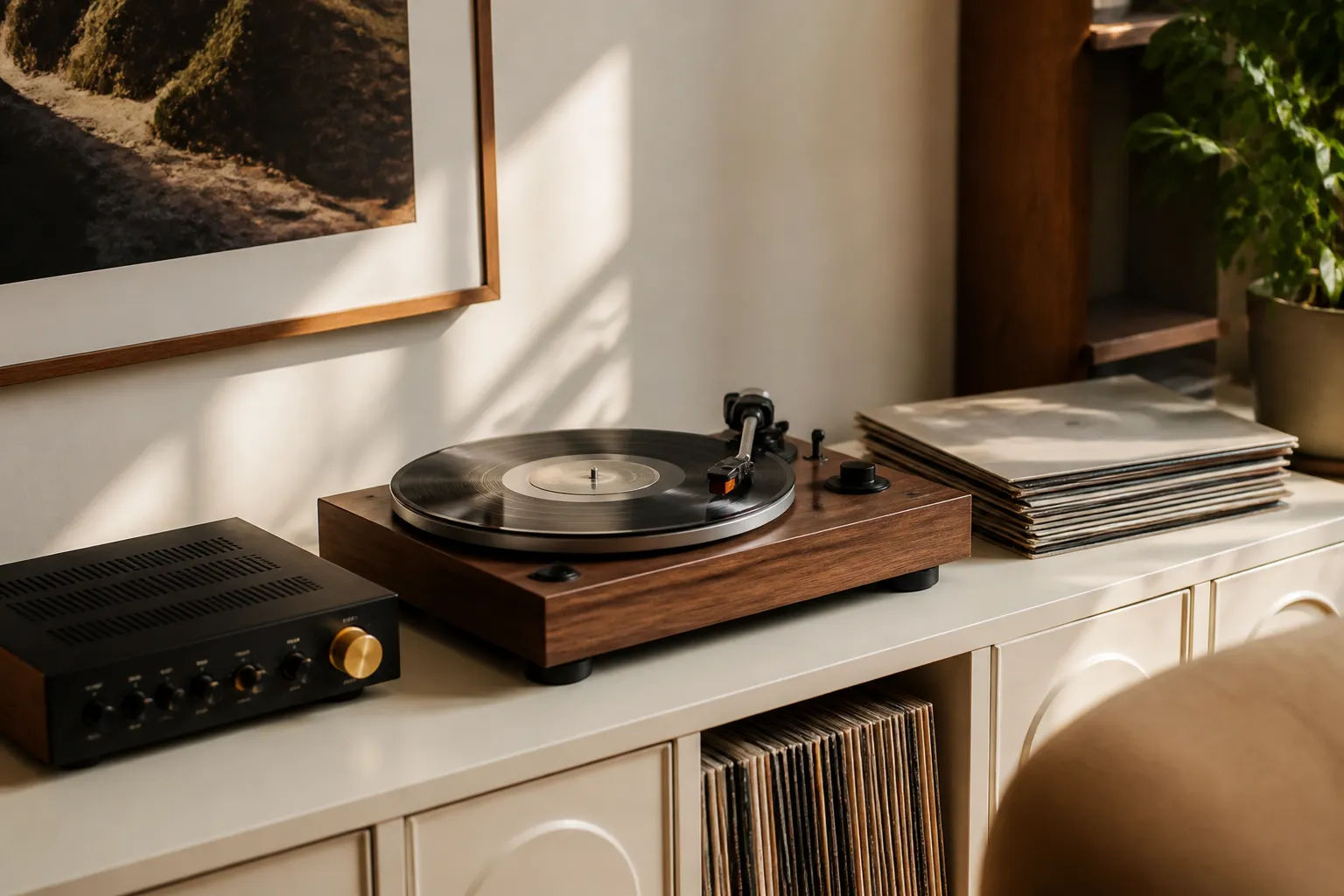
Direct Drive vs Belt Drive: Which Turntable Is Right for You in 2026
The direct-drive vs belt-drive debate is the oldest question in turntables, and in 2026 both designs have matured to the point where either can deliver excellent sound. The right choice depends less on absolutes and more on how you listen, where the deck lives, and what you value most.
How Each Drive Works
A direct-drive turntable spins the platter directly from a motor underneath it — no belt, no intermediate pulley. A belt-drive turntable uses an electric motor and a rubber or silicon belt to turn the platter, isolating the platter from motor vibration.
Speed Stability and Torque
Direct drive wins on raw speed stability and torque. The platter reaches target speed in less than a second and resists drag from the stylus. This matters for DJ use and for listeners who want rock-solid pitch. Belt drive trades a little absolute stability for a softer, more forgiving presentation.
Sound Character
Belt drive is often described as warmer, with a more natural decay, because the belt absorbs small motor vibrations before they reach the platter. Direct drive is often described as cleaner and more immediate. In 2026, well-engineered decks of both types narrow the gap considerably.
Maintenance
Belts stretch and age — expect to replace a belt every few years. Direct-drive decks have no belt to wear but require a motor with good bearings. Both benefit from periodic bearing lubrication and platter mat inspection.
Which Should You Choose?
Choose direct drive if you value speed accuracy, DJ functionality, or a low-maintenance deck. Choose belt drive if you prioritise acoustic warmth, want a classic analog feel, or prefer a quieter motor at idle. oneplusone builds both — explore the Direct Drive and Belt Drive collections to hear the difference.